

ELECTRICITY : THE RESTRUCTURING REFORM NOBODY IS TALKING ABOUT.
For decades, electricity was one of the most centralized sectors in Nigeria.
Before 2023, even if a governor wanted to build power plants, create a state electricity market, or license private investors to distribute power, the state had very limited constitutional authority.
Most powers were concentrated in Abuja through the federal regulator and national grid structure.
Then came one of the most significant restructuring reforms since 1999.
What Tinubu Did
On June 9, 2023.
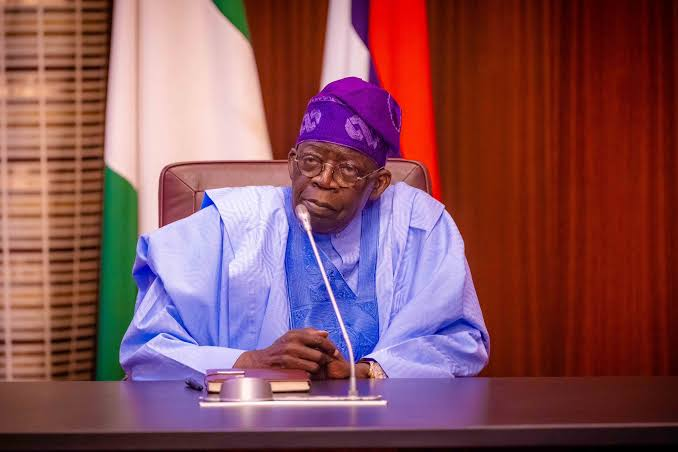
President Bola Ahmed Tinubu signed the Electricity Act 2023 into law.
The law:
– Allows states to generate electricity.
– Allows states to transmit electricity.
– Allows states to distribute electricity.
– Allows states to create their own electricity markets.
– Allows states to establish their own electricity regulators.
– Allows states to issue licences to private investors operating within their territories.
This effectively ended the near-monopoly Abuja had over electricity regulation.
Why This Is Historic?
Since independence in 1960, Nigerians have complained that too much power is concentrated at the centre.
Many national conferences recommended devolution of powers.
Many politicians campaigned on restructuring.
But few reforms actually transferred constitutional and economic powers to states.
The Electricity Act did exactly that.
The Nigerian Electricity Regulatory Commission (NERC) describes the Act as…
” A decentralisation of the electricity sector, empowering states to establish and regulate their own electricity markets while the Federal Government focuses on interstate and national grid activities.”
States Are Already Taking Control.
This is not theory.
As of 2026, at least 15 states have formally transitioned to regulating their own electricity markets.
Among them are:
Anambra
Lagos
Enugu
Oyo
Ogun
Abia
Imo
Edo
Bayelsa
Ekiti
Lagos Is Leading
Lagos became the first state to assume full control of its electricity market.
The state has already signed agreements for up to 400 megawatts of electricity supply for public facilities.
This is a model that other states can copy.
The Numbers Show Why This Matters.
Nigeria’s national electricity demand is estimated at over 30,000 MW.
Yet the national grid often delivers only a fraction of that demand.
For decades every governor waited for Abuja.
Now states can build their own solutions.
Compare Administrations.
Obasanjo (1999–2007)
Unbundled NEPA.
Created NERC.
Started power-sector reforms.
Jonathan (2010–2015)
Privatized generation and distribution companies.
Buhari (2015–2023)
Signed constitutional amendments moving electricity from the Exclusive List to the Concurrent List.
Tinubu (2023–Present)
Signed the Electricity Act 2023.
Operationalized state electricity markets.
Enabled states to regulate, license, generate, transmit and distribute electricity within their borders.
So, you can see that what this administration has done is remove the biggest obstacle holding electricity generation.
So in this campaign season, we must expect Governorship candidates to tell us plans they have for generating electricity.
But unfortunately, 99.9% of those who criticize the president don’t even know this .
