

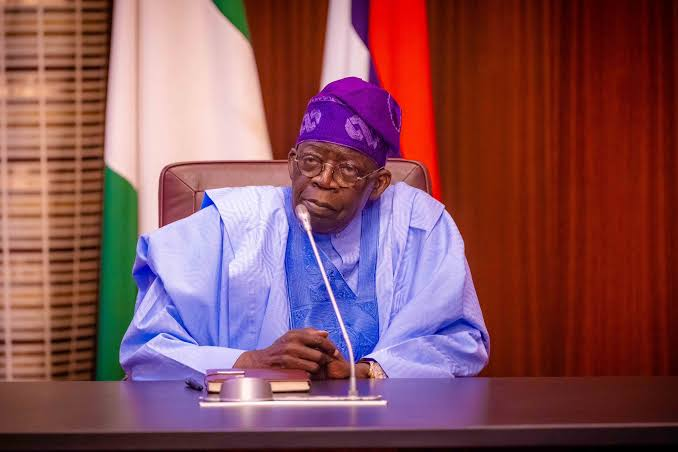
How Tinubu Is Silently Burying the Senators Who Entrenched His Power – Amid the Noise of Opposition Infighting
As opposition parties remain locked in noisy public squabbles, leadership crises, and mutual accusations that dominate headlines, President Bola Ahmed Tinubu is executing a quiet, methodical consolidation of power within the All Progressives Congress (APC). While the media spotlight remains fixed on PDP factions, NNPP internal battles, and other opposition distractions, the real story unfolds behind closed doors in state capitals and the Presidential Villa: a systematic sidelining of many senators who helped deliver and sustain Tinubu’s grip on Nigeria’s electoral and party machinery.
In late April 2026, Senate leadership visited the Presidential Villa to lobby for automatic return tickets for APC senators ahead of the 2027 elections. Their argument rested on reciprocity: having fast-tracked executive requests, confirmed nominees with minimal scrutiny, and passed key legislation, they expected continuity and stability. President Tinubu’s response was unambiguous. He rejected automatic tickets and directed the senators to return to their respective state governors, who would decide their political fate through party primaries—whether by consensus or direct means.
This directive is not a mere procedural nudge. It is a strategic masterstroke that transfers decisive control from the federal legislature to state executives. With the APC currently commanding 31 of Nigeria’s 36 state governorships, Tinubu has effectively narrowed the inner circle of power from roughly 109 senators (plus other National Assembly members) to a more manageable core of about 31 governors. These governors, many completing their second terms in 2027, now hold the keys to nomination forms, delegate structures, local government machinery, and party executives in their domains.
The Victims: Loyalists Turned Expendable
The senators now facing displacement are not fringe figures. They include high-ranking, experienced lawmakers who contributed significantly to entrenching the current administration’s authority. Their experience makes them valuable in legislative navigation but also potentially harder and more expensive to control—qualities that do not align with a preference for newer, less seasoned replacements who may prove cheaper to maintain and more pliable.
Notable cases illustrate the pattern:
– In **Yobe East**, incumbent Senator Musa Mustapha formally withdrew his re-election bid after a stakeholders’ meeting and endorsed Governor Mai Mala Buni for the seat.
– In **Gombe Central**, former Governor and long-serving Senator Mohammed Danjuma Goje, seeking a fifth term, has been sidelined through zoning and consensus arrangements favoring a candidate aligned with Governor Inuwa Yahaya.
– In **Ogun East**, former Governor Senator Gbenga Daniel finds himself in open conflict with Governor Dapo Abiodun, who has declared interest in the seat and secured significant caucus backing.
– In **Imo West (Orlu Zone)**, Senator Osita Izunaso faces Governor Hope Uzodimma’s positioning as the consensus candidate, with party leaders purchasing forms on the governor’s behalf.
– In **Adamawa North**, Rev. Amos Yohanna reportedly halted his re-election plans and facilitated Governor Ahmadu Umaru Fintiri’s entry as the preferred candidate.
Additional high-ranking APC members under pressure include Senator Ahmed Lawal, who faces challenges amid broader realignments in his constituency and party structures; former Governor Senator Ben Ayade of Cross River, who has publicly lamented three years of sidelining by the Tinubu administration despite his contributions and was directed to abandon his senatorial ambition for Cross River North; actor-turned-lawmaker Desmond Elliot, seeking a fourth term in the Lagos State House of Assembly for Surulere Constituency I but confronting strong stakeholder-backed opposition from a former Sanwo-Olu aide, with reports that President Tinubu declined interventions to impose his return; and veteran House of Representatives member Alhassan Ado Doguwa (Tudun Wada/Doguwa Federal Constituency, Kano), where APC moves toward a consensus candidate have raised prospects of his displacement despite long service.
Additional tensions simmer in states such as Kwara (where Governor AbdulRahman AbdulRazaq is reportedly eyeing the Central senatorial seat) and Nasarawa, alongside broader uncertainties for defected lawmakers who joined the APC expecting smoother sailing. Even influential figures like Senator Abdulaziz Yari in Zamfara navigate complex factional dynamics.
These are the very individuals and their allies who helped shepherd critical executive requests through the Senate: massive borrowing approvals, ministerial confirmations with limited scrutiny, supplementary budgets, the Student Loan Act, Tax Reform Bills, emergency declarations, and amendments to the Electoral Act that narrowed grounds for post-election challenges (including aspects related to credential issues). Their legislative efficiency strengthened executive dominance. Now, many find themselves politically vulnerable.
Replacing Experience with Controllability
The emerging strategy favors newer senators—often less experienced in federal legislative intricacies—who may be more dependent on gubernatorial and presidential goodwill. Veteran lawmakers, with established networks, institutional memory, and sometimes independent power bases, represent a higher cost of maintenance and a greater risk of future resistance. By empowering governors to anoint candidates, the process risks a high turnover that could erode legislative expertise while installing figures more attuned to state-level patronage structures.
This is occurring even as some defectors and loyalists who crossed party lines to bolster APC majorities now confront the same governor-controlled reality they helped create. The message is clear: loyalty is transactional and temporary. Many more high-ranking APC figures are yet to fall as the consensus machinery grinds forward across additional states.
An Immutable Political Law
History and political theory teach a consistent, immutable law: those who help entrench executive dominance or dictatorial tendencies are often the first victims once power is secured. They possess intimate knowledge of the compromises, deals, and mechanisms that facilitated the ascent. Such knowledge is inherently dangerous to consolidated authority. From ancient Rome to 20th-century examples across continents, legislators or allies who surrender oversight in exchange for proximity frequently discover that proximity was never partnership—it was utility.
In Nigeria’s context, the circle continues to shrink. Today, it tightens around governors and a select few. Tomorrow, even those currently indispensable may find themselves expendable as the logic of control demands ever-greater centralization. The remaining voices insulated from easy purge—due to constitutional protections or raw influence—will eventually face their own vulnerabilities. Until, potentially, only one dominant voice remains.
While opposition infighting provides convenient noise and distraction, President Tinubu’s quiet moves within the APC are reshaping the landscape for the 11th National Assembly. The senators who helped build the current edifice are learning a harsh lesson: in this political arithmetic, loyalty flows upward but is rarely reciprocated downward. The governor’s lodges are now the new gatekeepers, and the Villa door on automatic tickets has firmly closed only accessible to a select few.
The implications for Nigeria’s constitutional balance, institutional memory in the legislature, and the quality of future oversight are profound. As primaries approach in mid-May 2026, the nation watches to see how many of the architects of the present order will be quietly interred politically—buried not with fanfare, but under the calculated silence of “party discipline.
